
Cold-night heat retention
Low-E Window Film in Denver
Denver buildings heat for a long stretch of the year, and older single-pane glass lets that heat escape all winter. Low-e film adds an invisible coating that reflects heat back inside, while still handling summer sun.
 Denver
How Low-E Window Film Works in Denver's Climate
All objects radiate heat. In winter, warm walls, furniture and people in a room radiate heat toward the windows, and ordinary glass absorbs it and loses it to the cold outside. Low-emissivity film has a microscopically thin coating that reflects a large part of that radiant heat back into the room instead.
Denver's climate makes that useful. Cold nights are common from October through April, and clear skies mean heat radiates away fast after sunset. Old single-pane glass in a building's original windows can feel noticeably cold to sit next to. Low-e film reduces that chill and the heat loss behind it.
Most low-e films also reject a share of solar heat in summer and block nearly all ultraviolet, so they work in both seasons rather than just one.
Low-E Film for Older Denver Commercial Buildings
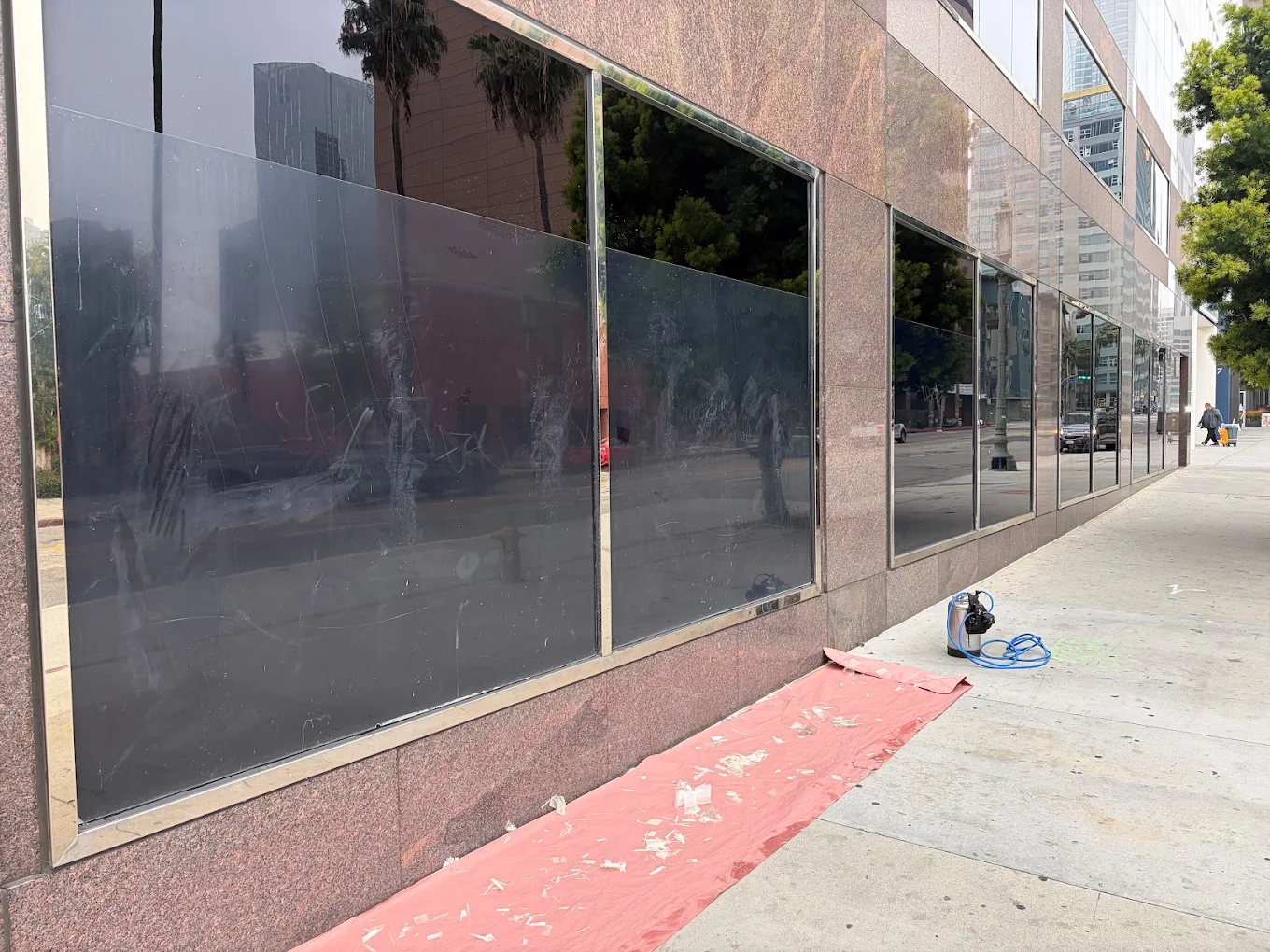
Downtown Denver still has office and institutional buildings from the mid-twentieth century with original single-pane glass in metal frames. Older schools, government buildings and churches across the metro are similar. Replacing those windows is expensive, disruptive and sometimes restricted when the building is historic.
Low-e film is a lower-cost upgrade that goes on the existing glass. It reduces winter heat loss and perimeter discomfort, and it trims summer solar gain. For buildings working toward Energize Denver targets, or Building Performance Colorado requirements outside the city, it is one measure that improves the envelope without a major capital project.
Film does not seal air leaks, and in a drafty building that matters as much as the glass. Older metal-framed windows often have gaps that let cold air in, and those need caulking, gaskets or weatherstripping too. We point them out during the site visit.
Low-E Window Film for Historic Denver Homes
Denver's older neighborhoods are full of original wood windows that owners want to keep for character. Historic district rules may also discourage replacement. Low-e film offers a way to improve those windows from the inside without changing them from the street.
Pair low-e film with interior or exterior storm windows and good weatherstripping, and an old window can perform much better on a cold January night. Before any film goes on century-old glass, the crew runs a hand along each lite looking for hairline cracks and crumbling putty, and only low-e products rated for thin single-strength panes make the shortlist.
Comfort, Condensation and Xcel Energy Heating Costs
Most Denver buildings heat with natural gas from Xcel Energy. Low-e film reduces how much of that heat escapes through the glass, which can lower heating demand. It also makes the area near the window more comfortable, since the inner surface of the glass stays slightly warmer.
A warmer inner surface also means less condensation on very cold days, although Denver's dry air already keeps condensation lower than in humid cities. We do not promise specific energy savings, because results depend on the building, the glass and how it is used. We do provide performance data so owners and consultants can estimate the effect.
Low-E Window Film Results Through a Denver Heating Season
Low-E Film Keeps Heat Indoors in Winter
On a clear, frigid Denver night, warmth from the room meets a coated surface that sends much of it back instead of letting it bleed out through old glass. Rooms near the windows feel warmer and the heating system works less to keep up.
Summer Solar Control From Low-E Film
The same coating turns away a slice of July sunshine as well. That gives a building one product that helps in both seasons, rather than needing separate solutions for heating and cooling.
Low-E Upgrade Without Window Replacement
Film goes on existing glass, so there is no removal of frames, no new units and no disruption to building occupants. Historic windows stay in place, and installation takes days rather than months.
Better Comfort Near Single-Pane Glass
Single-pane windows feel cold to sit near in winter. Low-e film warms the inner surface of the glass, making perimeter desks and window seats more comfortable through the heating season.
Denver Low-E Window Film Questions
Our windows are already double glazed. Does low-e film still help?
It depends. Many newer dual-pane windows already have a factory low-e coating, so adding film helps less. Low-e film makes the most difference on single-pane and older double-pane glass.
Does low-e film darken the window?
Many low-e films are fairly clear, though some carry a light tint. A sample square taped to your own window answers that question in seconds.
Can low-e film replace storm windows?
Not entirely. Storm windows add an air gap and reduce air leaks. Low-e film reduces radiant heat loss. Together they work better than either alone.
Does low-e film help with Energize Denver compliance?
Lower heating and cooling energy feeds into the benchmark, so film can play a supporting role. A building's path to its target will almost always involve controls, lighting and mechanical work as well, and the emissivity and U-value figures we hand over let a modeler weigh film against those options.
Window film quote
Price Low-E Window Film for a Denver Building
Is it a 1950s office with steel sashes or a Highland Victorian with wavy glass? Say which and give rough sizes on the quote form, and we get back to you with the low-e product we would use and its installed price.