
Big-glass heat control
Solar Control Window Film for Denver Commercial Buildings
A building with a sunny facade in Denver pays for it in cooling, glare complaints and faded interiors, even on cold days. Solar control film reduces the sun's load on the glass the building already has, without reglazing a single opening.
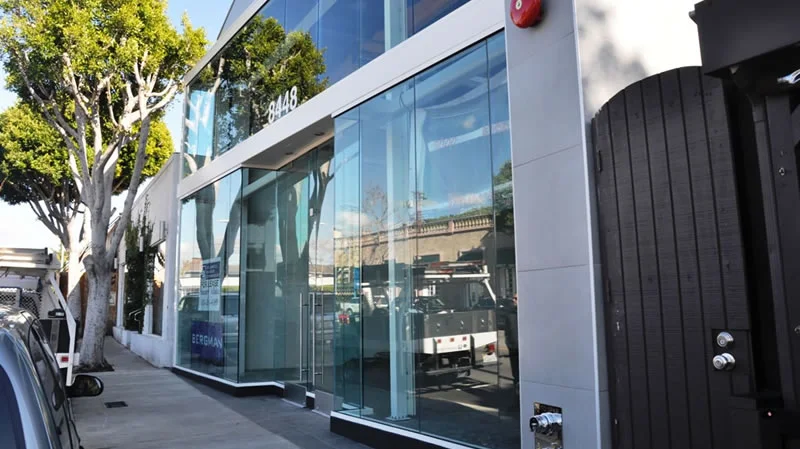 Denver
Why Solar Control Film Matters on Denver Facades
At 5,280 feet the sun reaches a building with less atmosphere in the way, and the dry air rarely softens it. Commercial facades facing south and west take a strong solar load on most clear days of the year. Because large office and institutional buildings generate so much internal heat from people, lights and equipment, many need cooling on sunny perimeter zones well into autumn and even on bright winter afternoons.
Solar control film cuts that load at the glass. Depending on the product, it rejects a share of the infrared and visible energy in sunlight while blocking nearly all ultraviolet. The building's air handlers have less to remove, perimeter zones stay closer to setpoint, and occupants spend fewer hours with the blinds down.
Thermal Stress, Temperature Swings and Glass Compatibility
This is the part that separates a careful commercial installer from a fast one. When film absorbs solar energy, the center of a pane heats faster than its edges, which are shaded and cooled by the frame. The temperature difference creates stress. In Denver, a facade can sit below freezing at dawn and take full sun by mid-morning, which widens that difference more than in mild climates.
Large insulated units, heat-strengthened or tinted glass, and panes partly shaded by fins, overhangs or neighboring buildings all need careful film selection. We identify the glass makeup from building records or on-site testing, check the manufacturer's compatibility guidance, and choose films that stay within safe limits for that glass. On large projects we put that analysis in writing for the building engineer.
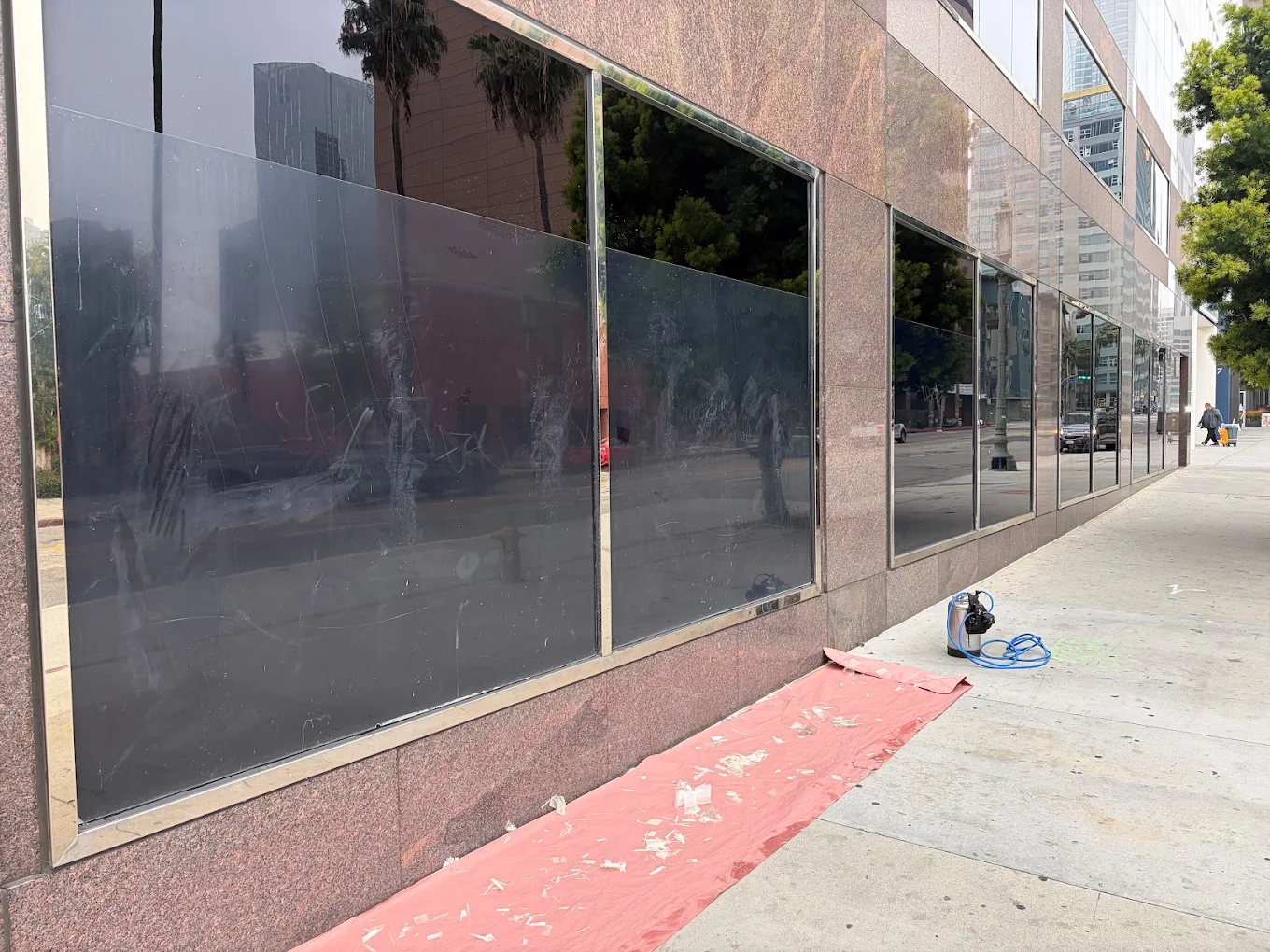
Solar Control Film for Tech Center, Hospital and School Buildings
The Denver Tech Center and the I-25 corridor south of the city are full of office buildings from the 1980s and 1990s with long ribbons of tinted or reflective glass. Many of those buildings still have their original glazing, and solar film is one of the few ways to improve it without reglazing. Older single-pane or early insulated glass often sees a large improvement.
Hospitals and medical campuses, from the Anschutz Medical Campus in Aurora to community hospitals across the metro, run around the clock and cannot shut down wings for window replacement. Film can be installed room by room with minimal disruption. School districts use solar film on south and west classroom windows, where afternoon sun makes rooms hard to teach in, often during summer break.
Exterior Appearance and Approval for Commercial Solar Film
Solar films range from nearly clear to highly reflective. Mirrored products win on raw heat numbers, yet they turn a facade silver by day, and some owners and architects will not accept that. Spectrally selective films preserve a neutral appearance with less heat rejection. For many owners, the right answer is a balance that improves comfort without changing the building's character from the street.
Partial installs need special care, because a building with film on some floors and not others can look patchy. We plan coverage by elevation and match films so the facade reads as one surface. Ownership, property management and sometimes an architect review the appearance before work begins, and we supply samples, mock-ups and data sheets for that review.
- Glazing identification and compatibility review
- Written thermal stress analysis on large projects
- Mock-up panels for owner and architect review
- Elevation-by-elevation installation planning
Solar Film, Energize Denver and Building Performance
Energize Denver requires larger buildings in the city to benchmark energy use and meet performance targets over time. Statewide, Building Performance Colorado sets similar requirements for large buildings outside Denver. Owners are evaluating envelope upgrades alongside lighting, controls and mechanical improvements.
Solar film can lower cooling energy and peak demand on sunny facades. It is not a complete compliance plan and should not be marketed as one. Our submittal lists SHGC, VLT and U-value for each candidate film so energy modelers can evaluate whether film earns a place in the building's plan.
Solar Control Window Film Results on Denver Facades
Solar Film Trims Cooling Loads
Solar control film reduces heat gain through south and west glass, easing the load on chillers, rooftop units and perimeter air handlers. Zones stay closer to setpoint, and equipment works less hard during the sunniest hours.
Glare Control for Occupants
With less daylight punching through, monitors and desk surfaces stop flaring white. Blinds stay open more often, which keeps daylight and views in the workspace and reduces the need for electric lighting near the windows.
Solar Film Without Reglazing
Film improves existing glass without removing curtain wall or window units. That avoids the cost, disruption and lead times of reglazing, and keeps occupied buildings running throughout installation.
UV Protection for Commercial Interiors
Nearly all of the altitude-strength ultraviolet stops at the film, so the fading of carpet, furniture, finishes and artwork. Interiors keep their appearance longer, which protects the value of tenant improvements and common-area finishes.
Solar Control Window Film FAQs for Denver Facilities
Can solar film crack our building's glass?
The risk is low when the film is matched to the glass. We review glass type, size, shading and compatibility guidance before recommending a product, which matters in Denver's temperature swings.
Our architect hates mirror glass. Is there a film that will not look shiny?
Yes. Spectrally selective and low-reflectance products look close to the original glazing from the street. A mock-up on one bay lets the architect judge it in person.
Is interior or exterior film better for commercial glass?
Interior film lasts longer and is easier to maintain. Exterior film may be used where interior application is not possible or where the glass type requires it. We recommend based on the specific building.
Does solar film help with Energize Denver?
Lower cooling energy flows into the annual benchmark, so film can help at the margins. Treat it as a line item in a larger plan and let your consultant run the numbers with our data.
Can film be installed in an occupied building?
Yes. We phase work by floor, zone or elevation and schedule around occupants, including nights and weekends.
Solar Control Window Film Service Areas in Denver
Window film quote
Scope Solar Control Window Film for Your Denver Building
Start the quote form with the building address and a list of hot zones. Elevation drawings and original glazing submittals are the most useful things after that, and we ask for them once we follow up. A written scope, a glass compatibility review and a price follow.